The term “intent” often arises in the legal justice system when establishing an accused person's guilt. Intent can either be general or specific. Many offenses require not only that a person commit an activity but also that they intend to do so. These offenses are referred to as general intent offenses. The most serious crimes entail an accused person who not only intended to perpetrate an activity but also perpetrated that activity with the intention of creating a particular result. These kinds of offenses are known as specific intent crimes. This blog looks at specific intent crimes in detail.
What Are Specific Intent Crimes
A specific intent crime is one in which the D.A. must prove the defendant had a specific objective or purpose in mind when perpetrating the illegal activity. In other words, the accused person must have both intended to perpetrate an illegal act and possessed the specific intent to cause the given outcome through their actions. If you are accused of a specific intent crime, the D.A. must show that not only did you willfully commit an offense, but you also specifically meant to break the law or inflict a particular injury or harm.
This is advantageous to you as the accused person because it is not sufficient for the prosecution to prove that you violated the law; they must also demonstrate that you possessed specific intent. That means having a specific intent is a requisite element making up the crime. Specific intent offenses can be classified as either felonies or misdemeanors.
Determining Intent
Establishing intention in specific intent offenses can be intricate. California courts employ different tests to determine intent, centering on the facts of the case and the defendant's actions.
One of the prevalent tests courts use is the “reasonable person” test. This test considers what any reasonable individual would have intended to do under the same circumstances. If any reasonable party would foretell their acts could result in a specific outcome, the judge might infer specific intention.
Another method is assessing circumstantial and direct evidence, like statements the accused made or an activity that indicates premeditation or planning.
Specific Intent Crimes Examples
There are several crimes under California law for which the prosecution must demonstrate specific intent for a defendant to be convicted. These crimes include, without limitation:
- Murder in the first degree (PC 187). In first-degree murder cases, the D.A. must prove that you not only deliberately caused the demise of someone else, but you also did so with deliberation and premeditation, indicating a particular intention to take a person's life.
- Lascivious or lewd acts with a child (PC 288). This offense, together with other types of child molestation crimes, is a specific intent offense. For the judge to convict you, the D.A. must demonstrate that you not only participated in sexual conduct with a child, but you also possessed the specific intention to arouse yourself or the minor. This is opposed to touching a minor's private parts while bathing them.
- Forgery (PC 470). Forgery is also a specific intent crime, as you must have intended to defraud a person by falsely altering or creating a document with the intention of passing it off as genuine or valid to be convicted. In this case, the specific intention is to deceive someone else. Whereas section 470 PC utilizes the language “intention to defraud”; other prevalent intents listed under this law are that the accused acted recklessly, purposely, willfully, or knowingly.
- Burglary (459). California's definition of the burglary offense necessitates an intent to break into a structure or building and perpetrate an offense while inside. The D.A. must show that you intended to commit a felony or theft once you broke into the structure.
- Petty theft (PC 484). This is a specific intent offense since not only should you have had the intent to commit an act of taking someone else’s property, but you must also have acted with the specific intent to deny the owner permanent ownership of their asset. In this case, the specific intent refers to the intent to steal, which surpasses simply taking another person's property.
- Robbery (PC 211). In a robbery case, the prosecuting attorney must establish that not only did you intend to take another person's property forcefully or using fear, but you also intended to deny the owner of it either permanently or for a long enough period to deny them a significant part of its value.
Other specific intent crimes are assault with the intention to commit rape or robbery, embezzlement, conspiracy, solicitation, and attempted crimes.
Specific Intent vs. General Intent Crimes
According to California statutes, there is generally a distinction between crimes committed with specific intent and those committed with general intent.
General intent offenses are those where the prosecution simply must prove that an accused person committed an offense. Put otherwise, the defendant needs only to have intended to perpetrate an act that the law criminalizes for them to be convicted. That means it does not matter whether they indeed intended to cause the specific outcome that their criminal activity resulted in. Common examples of general intent offenses are as follows:
- Rape (261). In rape cases, the D.A. must substantiate that the accused deliberately had non-consensual sex with a victim, focusing on the accused’s intention to participate in the activity itself instead of a specific intention to inflict harm.
- Battery (PC 242). In battery cases, the prosecutor must establish that you intentionally and illegally used violence or force on someone else. The prosecutor does not need to prove that you meant to cause the victim any harm. That said, you can be convicted of a battery offense even if your action does not cause actual pain or injury to the victim.
- Assault (PC 240). A typical general intent offense, assault, necessitates the accused person to deliberately do an act that makes another party reasonably fear immediate offensive or harmful contact. The D.A. need not prove that you had the intention of hurting the victim in the process.
- DUI (VC 23152). For DUI cases, prosecuting attorneys do not have to prove you meant to drive while intoxicated. They only need to establish that you intentionally drove a vehicle and were drunk when you did so.
Another way of explaining the distinction between specific intent and general intent crimes is through the concepts of mens rea and actus reus. Both specific intent and general intent crimes have these two legal concepts. Actus reus refers to the physical act committed by the supposed perpetrator, while mens rea refers to the defendant's state of mind when they committed the crime.
Specific intent refers to the defendant’s state of mind when they committed the crime. It necessitates not only the perpetration of an illegal act but also the perpetration of it with a subjective intent or objective. Put otherwise, with specific intent crimes, the prosecution must demonstrate both actus reus (the offense occurred) and mens rea (the defendant’s state of mind was that they meant to inflict harm).
That said, criminal intention becomes a mental element of the offense. Specific intent may be present when words such as "knowingly," "intentionally," "willfully," or "purposely" are used.
With a general intent to commit crimes, the D.A. must only demonstrate actus reus. That is, a defendant acted purposely to perpetrate the physical act of the offense.
Some laws require the intent that an accused person must have possessed when they committed an offense to be convicted of that offense. Often, criminal intent is requisite for the prosecution to obtain a conviction in certain instances. If there is criminal intent, the case might be considered to have met the required legal threshold to proceed with a conviction in a given legal category.
Sentencing Considerations and Differences for Specific and General Intent Crimes
The contrast between general and specific intent crimes may not always result in significant sentencing variances. However, the type of crime, mitigating and aggravating factors, and the accused person's criminal record are essential elements in determining punishment. In California, sentencing guidelines play a significant role in ensuring a consistent and fair approach to criminal sentencing.
Specific intent offenses may result in enhanced penalties because of their inherently higher level of criminal liability. For example, a conviction for first-degree murder, a specific intent offense, can lead to harsher sentencing. This includes the likelihood of capital punishment or life imprisonment without the possibility of parole, depending on the circumstances and jurisdiction.
For general intent offenses, sentencing is based on factors like the following:
- The type of injury the victim sustained
- Whether the violation involved using weapons
- The defendant's past criminal record
General intent offenses may not subject a defendant to inherently increased penalties solely based on intent. However, other factors specific to the case can affect sentencing outcomes.
Defending Against Specific Intent Crimes
Because these offenses center on a specific intent, a prevalent defense strategy is for an attorney to assert that you never acted with the intention listed under the law you have been accused of violating. In doing so, they must challenge the D.A.’s capability to show the requisite specific intent beyond a reasonable doubt. The lawyer may assert that you did not have the required mental state to perpetrate the crime. In a 470 PC forgery case, for example, a lawyer may successfully argue that you never intended to defraud.
Another defense is presenting evidence of intoxication. You can argue that being intoxicated prevented the creation of the proper criminal intent. For example, say you become excessively drunk and shoot someone or shoot at someone, and are accused of attempted murder.
In this case, you may utilize the fact that you were highly intoxicated to mitigate the shooting down to battery causing significant bodily injury, assault using a deadly weapon, or other relevant offenses. Still, the prosecution might not be able to obtain an attempted murder conviction, since the fact that you were so drunk, if you could prove it, could suffice to show you could not create the specific intention to kill, since your mental state was distorted by being overly drunk.
Other defense strategies may include the following:
- Mental illness that caused the formation of specific intent to be impossible
- Abandonment (if it is an attempted crime)
- Honest mistake of fact
These defenses focus on breaking the connection between mental state and actions. Since the D.A. must demonstrate both the intent and the act, casting doubt about any of these elements making up the crime can result in acquittal.
Possible defense strategies for general Intent crimes include the following:
- Lack of intention to perpetrate the criminal act. A legal defense for general intent crimes may entail asserting that you never intended to perpetrate the illegal activity. For example, in a simple assault case, you may argue that you never intended to cause fear of offensive or harmful contact.
- In general intent offenses such as rape, consent is a pivotal element. You may argue that the supposed victim agreed to the activity, invalidating the key element of the absence of consent required for a conviction to occur.
- Demonstrating a lack of voluntary action (for example, due to seizure or unconsciousness)
- Contesting evidence that you perpetrated an offense at all
- Arguing the mistaken identity defense
Unlike with several other charges, being high or drunk usually is not a defense strategy in general intent crimes. Defense centers on the action itself, rather than on what the accused person was thinking.
Understanding the legal technicalities surrounding specific and general intent is crucial. Developing an effective defense requires a deep understanding of intent as a key element of the crime.
Find a Knowledgeable Criminal Defense Attorney Near Me
Knowing whether you have been accused of a specific or general intent crime helps you develop the proper defense strategy. This distinction influences everything, from the evidence required to sentencing. Furthermore, courts continually refine these distinctions through their rulings. This is all the more reason you should seek legal help when facing charges. An attorney will explain to you what you must prove and what to expect.
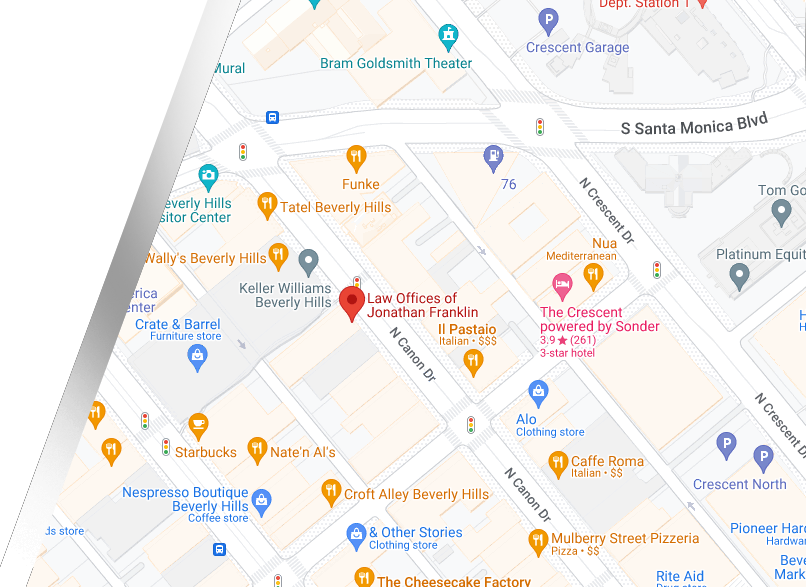
If you have been arrested or charged in Los Angeles, our team at the Law Offices of Jonathan Franklin can assist you. We thoroughly understand the specific and general intent concepts and will review your case to create effective defense strategies contingent on the intent requirements. To schedule a complimentary consultation, contact us today at 310-273-9600.