Before 2012, it was legal to openly carry an unloaded handgun, except in schools or government offices. However, in 2012, it became a misdemeanor offense to carry an exposed unloaded handgun on your person or in your car in a public setting. The statute remains the most reactive approach for public possession of a firearm. However, there are several exceptions that allow open carry of weapons in public settings, contingent on the type of gun, the place of carrying, the county's population, and whether the gun is loaded or unloaded. Understanding these exceptions and recent changes to open carry laws is crucial in understanding whether the action is legal or illegal.
Legality of California's “Open Carry” of a Handgun
Open carry means carrying a gun in a manner that exposes it or makes it visible to others instead of concealing it. It happens if the public can see your handgun, as it is in your hands, or you are wearing the firearm holster on top of your clothes. California bans the open carry of a handgun. However, there are a few exceptions to the rule contingent on the following:
- Whether the gun is loaded
- Firearm type
- The location where you exposed the firearm
- The county or city where the alleged violation happened
For instance, you can carry your gun exposed if you reside in a less-populated city or county. Also, you can carry your gun while exposed if you are on your private property without committing a crime. However, carrying the same firearm in a school or government building will result in charges.
There are two main classifications of open carry, depending on whether the firearm is loaded or unloaded. California prohibits the open carry of both loaded and unloaded handguns. It is crucial to familiarize yourself with these definitions and applicable legal exceptions because even the slightest exposure to a firearm can attract charges and a possible conviction.
Open Carry of a Loaded Handgun
Open carry only applies to handguns, which, as per PEN 26350, are defined as guns designed to be hidden within your person, such as revolvers and pistols. The list also includes shotguns with a short barrel or rifles with barrels below 16 inches, as these can be concealed within the body.
If you carry any of these weapons while they are loaded, you will face charges under PEN 25850. Generally, carrying a loaded handgun in plain view is illegal unless you are a concealed carry weapon (CCW) license holder. A standard CCW permit will not make it legal to open carry a loaded handgun in public. It only allows you to carry a concealed weapon. So, even with the permit, exposing your handgun in public attracts criminal charges and license revocation.
However, there are several exceptions to the prohibition on carrying a loaded weapon in plain view. These include:
- Having a special license issued by the county sheriff or police boss in a county with a population of less than 200,000. However, the permit is limited only to the county of issue. Open carrying a loaded weapon outside the county will attract misdemeanor charges, despite a permit.
- During hunting or camping, open carry must be within your campsite, as your campsite is deemed a private residence. Carrying a loaded handgun in plain view while hiking in a state or federal park will attract criminal charges, as this is deemed a public space.
Open Carry of an Unloaded Handgun
It is unlawful to carry an exposed handgun in public, even if it is unloaded. The offense is a misdemeanor and carries severe penalties upon conviction. The only time you can openly carry an unloaded handgun is if:
- You have a valid hunter's license
- You are a peace officer or an honorably retired officer
- You are a civilian partnering with peace officers
Carrying a loaded firearm in your car trunk or locked container is not a crime. Additionally, you can carry your handgun in plain view in your car in an incorporated street area, and the law makes it legal to carry a firearm in the area.
However, you will face charges under this statute if you willfully let people carry exposed handguns, even when unloaded in the car.
Open Carry of an Unloaded Long Gun
An individual who possesses an unloaded firearm in the sight of others in a county incorporated by law, in an incorporated city or town, or in an unincorporated area wherein firearms are prohibited commits a misdemeanor.
Changes Regarding Open Carry of Weapons in California Law
In January 2026, the Ninth Circuit Court challenged the total ban on open carry in a ruling made by a panel of three judges. The court opined in the case of Baird vs. Bonta that a complete ban on carrying an exposed gun in cities or counties with over 200,000 people was a breach of the Second Amendment. The court’s ruling affects California.
The Ninth Circuit Court’s decision adopted the U.S. Supreme Court standard in its ruling in the matter of New York State Rifle & Pistol Inc. vs. Bruen. In the Supreme Court, the judges ruled in favor of Bruen, who argued that states must demonstrate a historic tradition of extensive bans on carrying weapons in plain view in public. Applying this standard in its ruling, the Ninth Circuit Court judges ruled that, since there was no historical analogue to a ban on open carry in highly populated cities, it was illegal to ban open carry in populous cities or counties with over 200,000 people.
Despite the ruling by the panel, it upheld the current licensure schemes for legal gun owners residing in less populated areas. Therefore, if you reside in such an area, you can apply for a special license with the county sheriff. If your application is approved, you can legally carry your handgun openly without violating the law.
Nonetheless, open carry remains illegal, and the relevant laws are applicable. So, stay up to date on these changes, because assuming the court struck down the urban-area open carry ban would result in a violation and possible arrest, since the law is still enforceable.
California continues to enforce the open carry ban despite the January 2, 2026, court decision because, immediately after the verdict, the state’s Attorney General, Rob Bonta, appealed the decision on January 16 and requested that the Ninth Circuit form an 11-member panel to review the case. Due to the active appeal, the court's initial verdict has been stayed and cannot take effect until the appeal is resolved. Until the case is reviewed, carrying a gun in plain view remains illegal, despite the previous court ruling, and engaging in the violation can result in an arrest, criminal charges, and a possible conviction.
Legal Penalties of Open Carry
The legal penalties you will face for carrying a firearm in plain view depend on the specific statute you are accused of violating. A misdemeanor PEN 25850 violation upon conviction attracts:
- At most one year in jail
- Monetary court fines not exceeding $1,000
A felony conviction will result in the following sentence:
- 16 months, two, or three years in jail
- A maximum of $1,000 in fines
Carrying an unloaded gun in plain view is a misdemeanor. A conviction for the offense attracts:
- One year of confinement in county jail
- A fine not exceeding $1,000
- Both confinement and fines are imposed if aggravating factors, such as unlawful possession of ammunition, are present in your case.
Open carry of an unloaded long gun is also a misdemeanor whose conviction attracts no more than one year in jail or, at most, $1,000 in court fines.
Carrying an Exposed Gun While Hiking
California statutes make it illegal to carry a gun in plain view while in a state or national park. Even outside these locations, open carry while hiking remains unlawful, so it is crucial to understand where the ban applies.
Open Carry Legal Defenses
You can utilize several defense strategies to defeat the open carry charges against you. The common defenses include:
-
You were Unaware of the Firearm’s Presence
You are guilty of any violation of open carry statutes if you carried the gun knowingly. For a conviction to happen, the prosecutor must demonstrate that you knowingly carried the firearm while exposed. So, in your defense, you can assert that you were unaware of the handgun's presence. There are several reasons for open carry without knowledge of the presence of a gun. For example, you can assert that you borrowed someone else’s car and did not know they had an exposed gun in the vehicle.
-
You Openly Carried the Gun in a Lawful Location
There are several exceptions to open carry. Certain locations or places are excluded from the open carry ban, including:
- Private residences, which include the immediate area of your campsite when you are legally hunting.
- Unincorporated rural areas
- Incorporated places where open carry is legal
If you can argue that the arrest happened in areas excluded from the ban, the court will dismiss your charges.
-
Momentary Innocent Possession
You can assert that you momentarily exposed the firearm to repel an imminent threat of harm and that your firearm was reasonably concealed before then.
-
Illegal Search and Seizure
Police require probable cause or reasonable suspicion before stopping you, searching for a weapon, and detaining you for open carry. If the officer did not have reasonable suspicion you were committing a crime before stopping you or probable cause for a search, arrest, and detention, you can file for a motion to suppress evidence, arguing that it was obtained illegally. If the court grants your motion, the unlawful evidence will be suppressed, leaving the prosecutor with insufficient evidence to prove beyond a reasonable doubt that the accusations against you are true. As a result, they will dismiss your case.
Crimes Related to Open Carry
In many cases, the prosecutor lodges an open carry charge alongside another gun offense contingent on the case’s circumstances. Prosecutors can file multiple charges for the same case, leading to additional penalties. Understanding these related offenses can help you defend against them, too, and avoid additional penalties. The related gun crimes include:
Concealed Carry
PEN 25400 prohibits carrying a concealed weapon without a valid CCW. In open-carry offenses, many defendants can argue that their firearms were concealed or partially hidden. To ensure you do not escape justice, the prosecutor can file a concealed carry charge alongside open carry.
Carrying a Loaded Firearm in Public
It is illegal to carry any loaded gun in public, unless the legal exceptions apply to you. Many prosecutors file a PEN 25850 violation alongside your open carry violation charge.
Brandishing a Weapon
PEN 47 makes it illegal to display your weapon in an angry, rude, or threatening manner. If the officers believe you exposed your weapon to intimidate others, they can charge you with open carry alongside a PEN 47 violation.
Carrying a Gun in a Restricted Area
The law bans carrying a weapon in certain locations, whether the weapon is exposed or concealed. If your arrest for open carry happened in a school setting, government office, public area, or airport, the prosecutor will include an additional charge of having a gun in a restricted area.
When building defenses, your attorney should include defenses for the related offenses the prosecutor files alongside the baseline crime, leading to a fair verdict.
Find a Skilled Gun Offenses Attorney Near Me
California generally prohibits the open carry of a gun in public, whether it is loaded or unloaded. However, there are narrow exceptions that legalize open carry depending on whether the gun is loaded, gun type, location where you carry the gun, and the population of the county or city of arrest. Understanding these exceptions and legal changes is crucial in preventing a violation or securing a favorable verdict if you are charged with a gun offense.
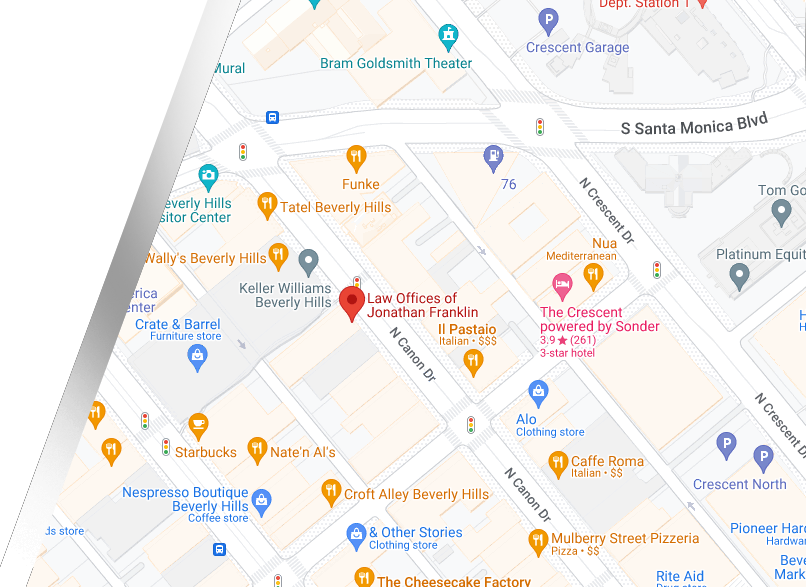
At the Law Offices of Jonathan Franklin, we will intervene early in the case to secure a dismissal or reduction of charges. Call us at 310-273-9600 to discuss your case in Los Angeles County.