Undoubtedly, we have some of the strictest gun laws in the country. To own a handgun, you must meet the required age criteria. Additionally, you also need to pass a thorough background check to be a lawful gun owner or dealer in this state. Some individuals may never even own or possess a firearm, including narcotic addicts and convicted felons.
Furthermore, it is also illegal to carry a concealed weapon or firearm unless you have a lawful permit to carry one. Hence, understanding gun laws, including the newest 2026 updates and amendments, is important if you are a gun owner or planning to own one.
If you are applying for a firearm license, are under investigation, or have any pending gun-related charges, working with a seasoned criminal defense attorney could be helpful. Here are twelve common and frequently asked questions about gun laws:
-
Who is and is Not Allowed to Own a Firearm?
According to the Second Amendment of the Constitution, most adults aged twenty-one years or older can buy, possess, and own a firearm. However, you have to secure a Firearm Safety Certificate (FSC) before you legally acquire your firearm. Unfortunately, certain people, regardless of age, could be ineligible to own or possess a firearm. For example, you would not qualify to own a firearm if:
- You are a convicted felon
- You are a narcotic addict
- You have a mental illness
- You are below 18 years, but own your BB gun with your parents’ consent
- You have a conviction for specific misdemeanor offenses, including corporal injury to a spouse or specific domestic violence-related crimes
It is also worth noting that the red flag law allows roommates, coworkers, family, teachers, and employers to seek a protective or restraining order to remove a firearm from the possession of a possibly dangerous person. Also known as Gun Violence Restraining Orders, these orders can help prevent continued abuse in domestic violence cases.
Also, it is important to note that if the court does not allow you to own a gun, owning or carrying any ammunition could attract criminal charges. Therefore, if you do not fall under any of these categories mentioned above, you can lawfully possess, carry, buy, and own a firearm.
After buying it, you can lawfully keep it in your house or place of business that you legally own. You can also carry it from one place to another as long as you keep it in a locked container. While Penal Code (PC) 26840 requires you to obtain an FSC, certain individuals are exempt from this requirement, including the following:
- People with a valid hunting license
- People who own long guns
To acquire an FSC, you must pass a written firearm safety test by the DOJ (Department of Justice).
-
What Does the Process of Purchasing, Selling, or Registering Your Firearm Entail?
Purchasing, selling, or registering your firearm involves strict rules and regulations. Here is an overview of what the process of purchasing, selling, or registering a firearm entails, respectively:
Buying
According to the Dealer’s Record of Sale, all firearm purchases and transfers should occur through a licensed firearm dealer, including private transactions and any purchase at a gun show. After purchasing your firearm, the dealer has the legal right to delay the handover or transfer for up to 10 days. However, PC 27510 makes it a crime for any dealer to sell, deliver, supply, or transfer a gun to anyone aged below 21.
However, exceptions to this requirement apply under certain circumstances. For example, a dealer can sell a gun to someone aged below 21, but over 18 if he/she:
- Has a valid legal hunting license
- Is an active peace officer
- An active federal officer
When buying your firearm for the first time, you should go to your preferred place with a document that proves your age, including a driver's license, identification card, or military ID. You also need to prove your residence, which you can do with a utility bill, property deed, or residential lease.
Selling
PC 26700 outlines the requirements you need to meet to become a licensed firearm dealer. When you satisfy all the requirements, you can begin selling firearms lawfully. These requirements include the following:
- You have a lawful and valid firearm license
- You have a business or regulatory license required by your local government
- You have a legal seller’s permit
Federal law requires any federally licensed gun dealer to conduct a background check on any person who wants to buy a firearm before making a sale. According to PC 26500, it is illegal to transfer, sell, or lease a firearm without a valid license. A conviction under this statute could attract a jail term of up to one (1) year and a fine not exceeding $1,000.
Registering
To register your firearm, you need to fill out and submit a FOR (Firearm Ownership Report) application. A well-completed report shows you are the rightful and legal owner of the firearm.
-
What Do I Need to Know About the Rules for Storing and Transporting Firearms?
Once you are a legal owner of a firearm, you must comply with the rules for storing and transporting firearms for your safety and the safety of the public. The rules that will apply in your case will vary depending on whether you want to transport the following:
A Concealable Handgun
To legally transport your handgun in the car, you must ensure it is unloaded and stored in a locked, secure container inside your vehicle or in the trunk. Transporting a loaded firearm could attract criminal charges. Your gun ammo should also remain in a locked container. Whether you are the driver or the passenger, you must comply with these rules.
Unconcealable Firearm
If you cannot conceal your firearm, you must ensure it is unloaded whenever you choose to carry it from one place to another. Examples of concealable firearms include the following:
- Carbines
- Rifles
- Long guns
- Shotguns
- A centerfire rifle
Assault Rifles
If you want to transport an assault rifle, you must ensure it is unloaded and safely stored in your locked container. It is also worth noting that you have a legal right to transport these firearms within a certain distance. For example, you can only transport an assault rifle to:
- Your private firm or property
- A licensed gun dealer to help with repair and servicing
- Another person’s property, as long as you have his/her permission
- Your firing range
Proper storage of your firearm is also important after you purchase it. To ensure your firearm is safely stored, you should ensure the following:
- It has a safety device on it, which locks the trigger
- It is unloaded
- It is in a safe or locked container
- Your gun is in a different location from the ammunition
However, additional safety measures will apply if you live in a household with children or with someone who is ineligible to own a firearm. Specifically, PC 25100 makes it unlawful to store a loaded gun in your home or any area of your control, and you know a person prohibited from legally owning a gun or children may have access to it without your permission.
-
Who Can Carry a Concealed Firearm?
According to PC 25400, it is unlawful to carry a concealed firearm unless you have a lawful permit, also known as a concealed carry permit (CCW). However, in many cases, even if you have a CCW, carrying a firearm in a public area is illegal. A PC 25400 violation is typically a misdemeanor, and a conviction under this statute could attract a fine of up to $1,000 and a jail term of not more than one year.
However, the following individuals are exempt from prosecution under this statute:
- Licensed firearm dealers
- Peace officers
- Bank messengers and guards
- Licensed hunters and fishers transporting a firearm for this activity
- Any member of the military
-
Can Anyone Open Carry a Firearm?
It is a criminal offense to open carry a gun, including unloaded and loaded firearms. However, there is an exception to this rule. If you live in a county with a population of 200,000 or fewer, the Sheriff may issue a license to open carry a loaded firearm.
-
Which Type of Firearms Are Illegal?
PC 16590 is the law that specifies which firearms and related accessories are illegal. Specifically, this statute makes it a crime to do any of the following with the prohibited firearms:
- Manufacture them
- Import them
- Possess them
- Lend them
- Keep them for sale
- Give them out
- Put them up for sale
Common examples of prohibited weapons under this statute include (but are not limited to) the following:
- Unconventional pistols
- Short-barreled rifles or shotguns
- Undetectable firearms
- Cane guns
- Zip guns
- Wallet guns
A PC 16590 violation is a wobbler, meaning it can attract either felony or misdemeanor penalties. A misdemeanor conviction under this statute is punishable by a fine of not more than $1,000 and a jail term of not more than one year. However, a felony will attract a harsher penalty, including a jail term of not more than three years and a fine not exceeding $10,000.
-
What Does the Law Say About Assault Weapons?
According to PC 30600, it is unlawful to distribute, manufacture, import, give away, transport, or sell assault firearms and BMG rifles. The prosecutor could secure a conviction against you under this statute if he/she can prove that:
- You performed an unlawful act knowingly
- Knew or reasonably should have known that the involved weapon qualifies to be a BMG rifle or assault rifle
However, it is worth noting that certain qualified personnel may apply for a license to manufacture and sell these firearms to military or law enforcement agencies. That means the prosecutor cannot secure a conviction against you under this statute if you have this permit.
-
Which Places are Firearms Prohibited?
Generally speaking, carrying guns in places like school grounds and public buildings is illegal to ensure safety and prevent violence in environments where vulnerable populations gather. Other places where it is illegal to carry a firearm include the following:
- Government buildings
- Governor’s mansion
- Parcel vessels or airport terminals
- Public transit facility
-
What Do I Need to Know About Ammunition and Firearm Accessories Rules?
In addition to addressing firearms, gun laws are broad and also impose restrictions and rules on various ammunition and firearm accessories, including the following:
- Stun guns
- Large capacity magazines
- Silencers
- Armor-piercing magazines
- Laser pointers and laser scopes
Owning or having any of these ammunition and firearm accessories is illegal. For example, carrying or owning a silencer is a felony under PC 33410, and a conviction could result in a penalty of up to 3 years in jail.
-
Can I Have My Gun Rights Reinstated After a Conviction?
As mentioned in the previous paragraph, felony convictions and a conviction for specific misdemeanor offenses, especially those related to domestic violence, could make you ineligible to own, buy, possess, receive, or carry a firearm. However, despite these strict rules, you could qualify to reinstate your gun rights after a conviction by:
- Having your wobbler offense reduced to a misdemeanor
- Applying for gubernatorial pardon
-
Which are the Most Prevalent Crimes Involving Firearms?
There are several crimes you could face under the Penal Code that involve a firearm, including (but not limited to) the following:
- Changing a firearm's identifying information
- Brandishing a firearm
- Drive-by shooting
- Assault with a weapon
- Illegal possession of a firearm
-
Are Ghost Guns Lawful?
When you choose to assemble your own gun, you must apply for a serial number to affix to it unless the frame or receiver used already has a serial number. Also, you need to undergo a thorough background check to buy receivers or unfinished frames.
Failing to follow these rules before you assemble your own gun is a misdemeanor offense that could carry up to six months of jail time and a fine not exceeding $1,000.
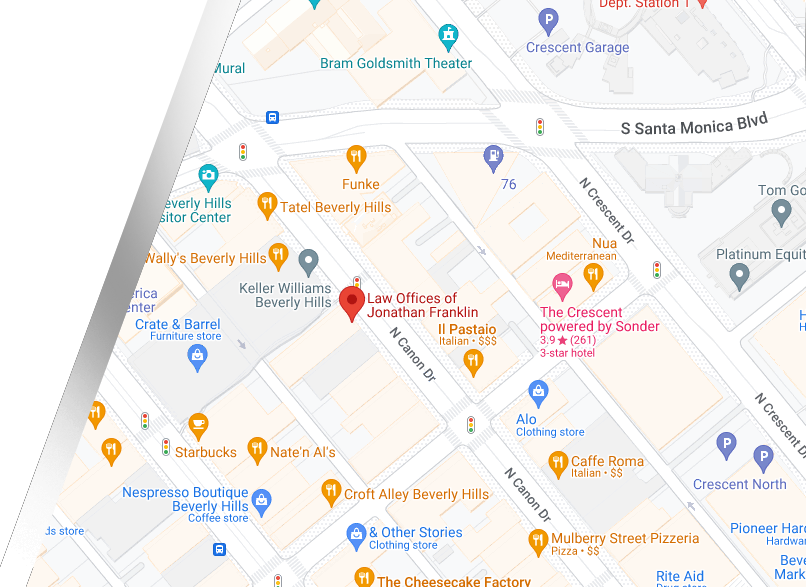
Find a Criminal Defense Attorney Near Me
If you have recently purchased a firearm or are planning to, you need to understand the ins and outs of gun laws to avoid making a mistake that could jeopardize your gun rights or attract criminal charges. We invite you to call our credible bail bondsmen at the Law Offices of Jonathan Franklin at 310-273-9600 if you need to know more about gun laws or need any legal assistance to challenge a gun-related charge in Los Angeles.