Juvenile probation is a court-supervised program that keeps your child under the jurisdiction of the juvenile hall, focusing on rehabilitation and community safety rather than incarceration. There are consequences of a minor's failure to follow the conditions of his/her supervision as provided for in the California Welfare and Institutions Code. The process involves informal probation, Deferred Entry of Judgment programs, Home on Probation (HOP) supervision, supplemental petitions, and various other measures that judges can impose.
Understanding these complex legal procedures is essential for families navigating the California juvenile justice system. Strong legal representation ensures that your child's constitutional due process rights are protected at every stage, from accusations of noncompliance to changes in supervision and the threat of institutional placement. Let us look at the consequences of violating a juvenile's probation in various situations.
Violating Informal Probation
California's informal probation system is a crucial diversionary program that is regulated by Welfare and Institutions Code Section 654. This administrative process is for lower-level (or first-time) offenders and lets your child avoid filing a formal delinquency petition. It instead requires a 6-month contract overseen directly by a county probation officer. When police or school officers catch a minor committing a minor offense, they often send the case to county probation instead of filing formal court charges. Intake officers determine if the youth is a viable candidate for diversion by weighing factors such as:
- Family support
- The lack of a history of previous youth delinquency reports
- Lack of severe property damage or physical violence
When you sign an informal probation contract, you and your child agree to a structured set of behavioral expectations without ever standing before a judge or admitting guilt to a criminal offense. This agreement is a second-chance agreement that avoids progression in the superior court system and the establishment of a delinquency record. But there is much voluntary compliance and active cooperation with informal oversight. Since there is no judge's order involved, the probation department's main leverage is the threat of filing formal court charges if your child breaks the rules.
If your child does not follow the conditions of this informal settlement, the case quickly moves from administrative to formal court oversight. The probation officer reviews your compliance record, finds that diversion was unsuccessful, and closes the administrative file with an adverse recommendation. The case is immediately transferred to the District Attorney's Office. Prosecutors review the original police report and incident files to determine whether to file a formal delinquency petition pursuant to Welfare and Institutions Code Section 602. After a petition is filed, the status quo is no longer afforded, and the disposition in juvenile court is far more serious and has more repercussions.
As the case shifts to formal proceedings, the District Attorney files a § 602 petition, charging your child with delinquent conduct that would be a crime if committed by an adult. The informal administrative meetings are replaced by court hearings, during which the minor is subject to:
- Extended wardship
- Formal probation under Welfare and Institutions Code Section 725
- Placement in a county juvenile facility
Moreover, if Section 654 supervision is denied, the deferred entry of judgment under Welfare and Institutions Code Section 790 is lost, closing off opportunities to dismiss the charges before trial.
In addition to structural court penalties, a formal § 602 petition subjects the youth and family to a series of court conditions, such as:
- Search and seizure waivers
- Drug testing
- Electronic monitoring
- Significant restitution to victims under California Penal Code § 1202.4
School districts often receive notice of formal complaints regarding a particular offense and may initiate administrative disciplinary actions, which may include suspension or expulsion hearings. It is important to have a well-seasoned juvenile defense attorney present as soon as you notice non-compliance. This will help your attorney:
- Negotiate the reinstatement of informal supervision
- Contest claims of contractual violations
- Submit a motion to dismiss the petition before entering the formal adjudication process
Triggers for Informal Probation Violations
Informal probation under Section 654 gives your child a chance to stay out of juvenile court, provided they follow all the required conditions. When a youth fails to satisfy these administrative requirements, the probation department routinely terminates the diversion agreement. It directs the file directly to the District Attorney's Office for formal prosecution under Section 602.
Several common reasons for non-compliance cause revocation and court escalation:
- Unexcused absences from probation meetings — Absence from scheduled probation meetings (office, home, or otherwise) without the county probation officer's written permission or medical documentation will be an immediate breach of trust.
- Failure to complete mandatory community service — If the community service is not completed within the required six-month period, it is a sign of non-compliance, and the diversion will be terminated. Your child’s diversion file will be marked unsuccessful.
- Curfew violations and school truancy — Formal reports of non-compliance are often generated when probation officers or parents report curfew violations, when a significant number of school absences are for no good reason, or when behavioral disruptions at school are severe.
- Substance use or missed counseling sessions — Positive drug test results on random urine drug screens and failure to enter into and complete mandatory substance abuse counseling, educational workshops, or restorative justice programs directly impact the rehabilitation goals of Section 654.
- Recurrent delinquent behavior or prohibited contacts — If the probationer commits new law violations, engages in minor violations, or continues to associate with known delinquents at probation intake, it shows the probation officers that informal supervision is not enough to change the behavior.
Any of these triggers will result in the probation officer writing an adverse summary outlining the minor's failure to comply.
The Legal Consequences and Court Escalation
Upon failure of informal diversion, the District Attorney meets with the probation department regarding the adverse file and files a formal delinquency petition under Welfare and Institutions Code Section 602. This filing by the office sends into effect regular juvenile court proceedings, which convert an administrative resolution into an actual prosecution. Filing the petition means your child will no longer qualify for informal diversion under Section 654. This change will necessitate your defense attorney to:
- Negotiate complex formal resolutions, for example, Deferred Entry of Judgment (DEJ) under section 790
- Develop a complete trial strategy for an adjudication hearing
The juvenile court then sets a formal detention or arraignment hearing at which your child, along with their attorney, will be required to admit or deny the new charges. Being subject to active prosecution puts youth at immediate risk of formal wardship under Welfare and Institutions Code Section 725. This law grants the court supervisory control over your child.
There are restrictive requirements during litigation. These include:
- Mandatory curfew limitations
- Fourth Amendment search-and-seizure waivers
- Random drug testing
- Court-ordered restitution under Penal Code § 1202.4
In extreme situations, the judge can mandate that the minor be placed in out-of-home care in a county juvenile hall, camp, or residential treatment facility, which can have lifelong effects on the minor's education, personal freedom, and long-term record.
Violating a Deferred Entry of Judgment (DEJ) Program
Welfare and Institutions Code 790 provides an alternative sentencing device to Deferred Entry of Judgment for minors who are charged with nonviolent felony offenses. This program allows your child to plead guilty to the allegations in the delinquency petition. However, the judge does not enter a finding of delinquency; instead, the child is referred to probation, and no disposition hearing is held. Once the child has completed a DEJ program, all charges are dropped, and arrest and court records are sealed. This means your child will be able to enjoy his/her future educational and career opportunities without worrying about arrest and court records being available to employers.
However, violating the requirements of a DEJ program will halt the deferral process and result in the strict statutory revocation procedures being invoked. A court review hearing is scheduled to determine whether the deferred status will be lifted if the probation officer reports noncompliance. If the judge denies the DEJ, which is the purpose of the initial admission, the child is automatically found guilty and declared a ward of the court. This change eliminates the protective shield and leaves the child with a permanent juvenile delinquency record and a slate wiped clean, subject to severe formal consequences.
There are specific legal procedures under Welfare and Institutions Code Sections 791 and 793 when a DEJ violation occurs:
- The probation department shall file a notice of motion to revoke deferred entry of judgment, setting forth the failure or failures or subsequent crimes committed during the period of probation
- At the subsequent revocation hearing, the judge will decide whether the child on probation failed to follow the rules or violated the law again. Because the child already entered an admission when he/she entered the program, the child will not have a new trial for the original offense. However, the hearing focuses entirely on the alleged breach of probation and on whether the benefits of deferred entry should be terminated.
Common Violations Under DEJ Supervision
Formal juvenile probation under Welfare and Institutions Code Sections 725 or 602 carries serious legal consequences if violated. Formal probation differs from informal probation because it is directly subject to the court's orders under the WIC 777. The court may immediately increase the amount of custody if a minor is found in breach of these conditions.
Typical reasons for probation to be revoked for a formal probation violation include:
- New law violations — Any additional misdemeanor or felony charges that are brought during a probation period while on active court supervision
- Educational non-compliance — Failure to meet satisfactory school attendance, behavior, academic progress, or graduation requirements
- Failure to complete mandated programs — Not taking required specialized programs, for example, drug or alcohol abuse treatment, anger management, or any other particular programs
- Unpaid restitution and fines — Failure to make required restitution payments pursuant to PC 1202.4 or failure to pay restitution court fees
- Unauthorized travel — This means leaving the court's jurisdiction without first obtaining written permission from the county probation officer assigned to the court
Consequences of DEJ Revocation
The deferred status is revoked when a minor fails to meet the standards of Deferred Entry of Judgment (DEJ) in Welfare and Institutions Code Section 790. The legal implications force the case into formal adjudication:
- Entry of judgment and wardship — The judge removes the deferred status, enters formal judgment after the youth has been admitted, and names the youth a ward of the juvenile court pursuant to WIC § 602.
- Active juvenile delinquency record — The opportunity to have a case dismissed and the record sealed is permanently lost pursuant to WIC § 786. This establishes an active juvenile delinquency record.
- Formal disposition hearing — This is a court hearing where the court formally sentences the youth, possibly placing them in a juvenile hall or camp or setting conditions for their probation.
- Intensive supervision — The child faces an increased risk of being placed under the supervision of zero-tolerance probation officers for any future offenses.
Violating Home on Probation (HOP) Probation
Home on Probation is a type of formal wardship probation in which the juvenile continues to reside with the family and is under the direct supervision of the juvenile court and the county probation department. Since HOP is a formal wardship provision under Welfare and Institutions Code Sections 602 and 725, noncompliance with its provisions results in severe legal consequences under WIC 777.
Formal wardship involves the court having continuing legal jurisdiction and control over your child’s placement, education, and welfare during the probationary period, as opposed to informal probation or administrative diversion.
When a probation officer alleges a breach of HOP terms, the District Attorney files a supplemental petition under WIC 777. This petition will state that the previous court orders have failed to rehabilitate the minor. Furthermore, it will outline the specific violations that necessitate a modification of the current disposition. Your child has the right to a formal probation violation hearing, in which the prosecution must prove the violation by a preponderance of the evidence. If the court agrees, it may increase the severity of the penalties, from home monitoring to a county youth facility or youth treatment center, for a longer period.
Understanding the juvenile evidentiary standards is necessary to navigate a WIC 777 supplemental petition. While the rules of evidence apply, reliable hearsay is admissible in the form of reports from the probation officer. Thus, it is crucial to cross-examine witnesses properly. If a violation is found, the court evaluates alternative placement options, ranging from electronic monitoring to intensive day reporting centers to commitment to county juvenile hall or regional youth facilities under current laws and statutory guidelines, including Secure Youth Treatment Facilities (SYTF) established under SB 823.
Procedural Rights During HOP Violation Hearings
Minors have important constitutional and statutory protections against a judge whose decisions could affect court orders or lead to a referral to Home on Probation (HOP) violation proceedings under Welfare and Institutions Code § 777:
- The right to receive written notice from the department of the specific probation violation or violations that are being alleged before a court hearing
- The right to representation at all stages of the review and modification process by a competent juvenile defense attorney
- The right to cross-examine prosecution witnesses, probation officers, and school representatives to question the reliability of the documents they've submitted
- The right to present evidence on your behalf, including character references and school progress reports
- The right to a hearing in which the prosecution is required to prove the violation by a preponderance of the evidence.
Potential Consequences for HOP Violations
WIC 777 lets a judge, when determining a minor's violation of the terms of Home on Probation, adjust the original disposition. The severity of the penalty depends on the nature of the violation, history of delinquency, and progress made while supervised. The potential consequences include the following:
- Increased supervision — Court can lengthen the entire period of probation, set strict curfews, impose Fourth Amendment search waivers, or require electronic GPS tracking
- Juvenile hall commitment — Noncompliance can result in a judge's order of short- or long-term detention in a county juvenile hall as a corrective or sanction
- Camp or ranch placement — Severe or repeated probation violations can lead to placement in a structured county juvenile ranch, residential camp, or habilitation facility
- Out-of-home foster placement — If the court finds that home placement is not in the best interests of the minor, the minor may be placed in a foster home, with a relative, or in a special group home
- Secure Youth Treatment Facility (SYTF) — A child could be placed in a Secure Youth Treatment Facility if they commit a serious felony-level violation of a listed offense in accordance with the guidelines established in Senate Bill 823
Call a Juvenile Defense Lawyer Near Me
Facing a juvenile probation violation means risking the loss of diversion programs, automatic entry of judgment, formal wardship, and potential out-of-home placement. A strong advocate is crucial when your child potentially faces harsh consequences for a probation violation. An experienced Los Angeles attorney will evaluate your child’s case, examine compliance records, and build a strategic defense tailored to the juvenile court system.
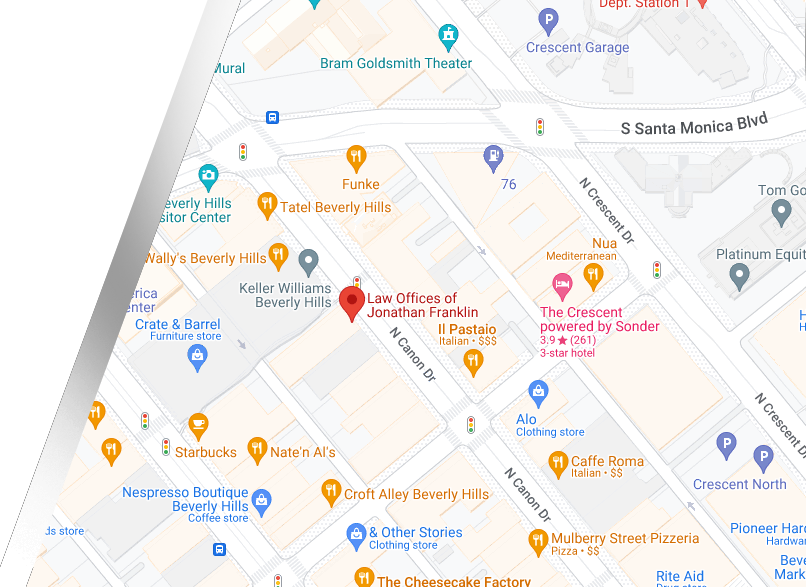
At the Law Offices of Jonathan Franklin, we understand how difficult these proceedings can be for families and are prepared to do everything possible to ensure the best result. It is not too early to start, so call us today at 310-273-9600 and get the experienced legal help.